
I guess we all have romanticised the extremes.
Some days the fantasy is deeply rooted in the urban company aesthetic. You want to walk into a sleek glass-walled office on the top floor of a downtown skyscraper wearing your quiet luxury cream-coloured cashmere Totême outfit that shouts quality without any visible logos. You are holding an overpriced Cappuccino, staring out at a sprawling city skyline while you conquer your to-do list. You want the energy, the buzz of the urban core, and the sleek illusion of total control.
Three days later, the fantasy shifts entirely. You want to pack up and move to a remote waterfront cabin with neighbours nowhere near the property lines. You still keep the cashmere Totême outfit, but you only wear it once a month for your required city drop-in. The second that visit is over, you take an Uber helicopter back home, landing right in your own yard, shoes in hand and absolutely ready for your comfy pants.
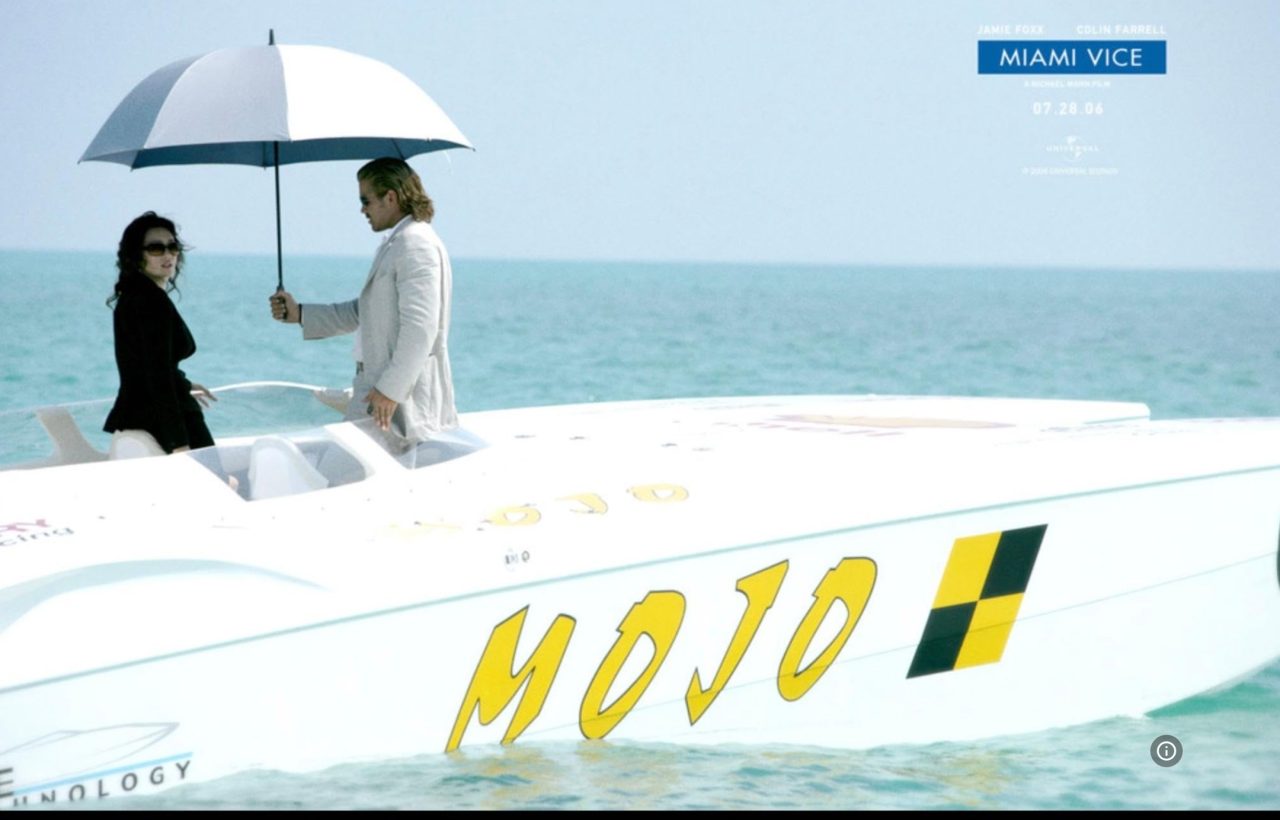
Some days it’s “just” a Miami Vice-style speedboat ride to Havana with Colin Farrell…
It is a fun mental pendulum. But beneath those dramatic daydreams of skyscrapers versus helicopter or speedboat commutes lies a much more practical question.
Have you noticed the link between the environment you are craving and the work you are trying to do?
The environment is not the backdrop
Most of us run our careers treating our environment as a static backdrop. We wake up, go to the same desk, open the same laptop, and expect our brains to perform regardless of what is happening around us.
But your cognitive output is not fixed. It fluctuates depending on where you are, who is around you, and how much sensory noise you are absorbing. Neuroscience has known this for a while. Research shows that low-level background noise in open offices spikes stress hormones and causes cognitive fatigue. You burn out not because the work is too hard but because your nervous system is constantly fighting your surroundings to maintain focus.
This is exactly why the remote waterfront cabin fantasy feels so appealing when you are mentally exhausted. It is not escapism. It is a biological signal. Environmental psychologists Rachel and Stephen Kaplan showed that natural environments restore the kind of directed attention that urban environments quietly drain. When you need to process complex strategy, a quiet room away from the noise is not a luxury. It is a functional requirement.
The skyscraper fantasy serves a different but equally real purpose. Dynamic, slightly noisy environments prime the brain for divergent thinking, the cognitive state you need for rapid collaboration, creative friction, and the kind of ideas that only emerge when other people’s energy is in the room.
The cabin and the skyscraper are not opposites. They are tools. The problem is most of us never think about which one we are reaching for or why.
The thing that is actually hard
I feel that the return-to-office debate is a distraction. The location is not the problem.
The problem is that most organisations are still running a century-old industrial model that measures productivity by the number of hours a body is visible in a chair. That model never needed you to understand yourself. It just needed you to show up. And showing up is significantly easier than knowing what you actually need and when you need it.
Because here is what the skyscraper fantasy and the cabin fantasy are both pointing at: your cognitive capacity is not constant. Every person has a biological rhythm that dictates when they peak for deep, focused work and when they are genuinely better suited to collaboration, creative friction, or frankly nothing that matters. Chronobiology is the science of it. You have that experience of scheduling a complex strategy session at four in the afternoon on a Thursday and wondering why nothing is moving; that is the evidence.
The self-awareness this requires is not something the traditional corporate structure has never asked for. It only required compliance. Sit in the assigned chair, be visible, let the environment and the calendar dictate the day.
Psychologists call the alternative an internal locus of control. You notice the mismatch and you locate the cause accurately, including when the cause is you. Not the open-plan office being too loud. Not the team interrupting at the wrong moment. Your bad day is caused by you scheduling the wrong kind of thinking into the wrong kind of environment at the wrong time of day. And your experience has an entirely predictable result.
That is not a character flaw. It is just a habit nobody trained you out of, because the system was not designed to think about your chronobiology.
The organisations that will actually get this right are the ones brave enough to move to task-based working. Focus on what you are actually producing and whether the conditions you created for yourself made that possible, rather than where you are or how many hours you work. It is a harder model to manage. It is also the only honest one.
Any system can be gamed. People have been clocking in and doing nothing for as long as clocking in has existed. The office never solved that. Neither will remote work.
Remote leadership is a competence of its own. So is task-based leadership. Neither is just an adjusted version of showing up and walking the floor. They require a genuinely different skill set around trust, communication, and knowing what your people are actually doing without needing to see them do it. We have spent roughly fifteen years debating where and how people should sit. We have barely started the conversation about what it takes to lead well.
The audit worth doing
The question is not whether you are a Singapore or a Vermont person. It is whether you know which one you need today for that specific kind of thinking that today actually requires. The strategic precision that Singapore demands from you. The slow, deep thinking that Vermont will not start until everything else has gone quiet. The collaborative friction of Manhattan or the suspended urgency of Havana, where the salsa reminds you that some things only work when you stop forcing them. Those are not holiday moods (even if my husband is still in doubt). They are cognitive states. And your brain has been trying to tell you which one it needs every time you catch yourself fantasising about a speedboat in the middle of a meeting.
Some of that is about the environment. Some of it is about time of day. Some of it is about how much you have already spent on other people’s problems before you even get to your own.
The Toteme outfit works in all locations. The cappuccino is optional. Self-awareness is not.
So do you know what your brain is actually asking for when you start craving the cabin or the skyscraper? Or do you just ride the fantasy until yet another Monday morning forces you back to wherever you already are?


