
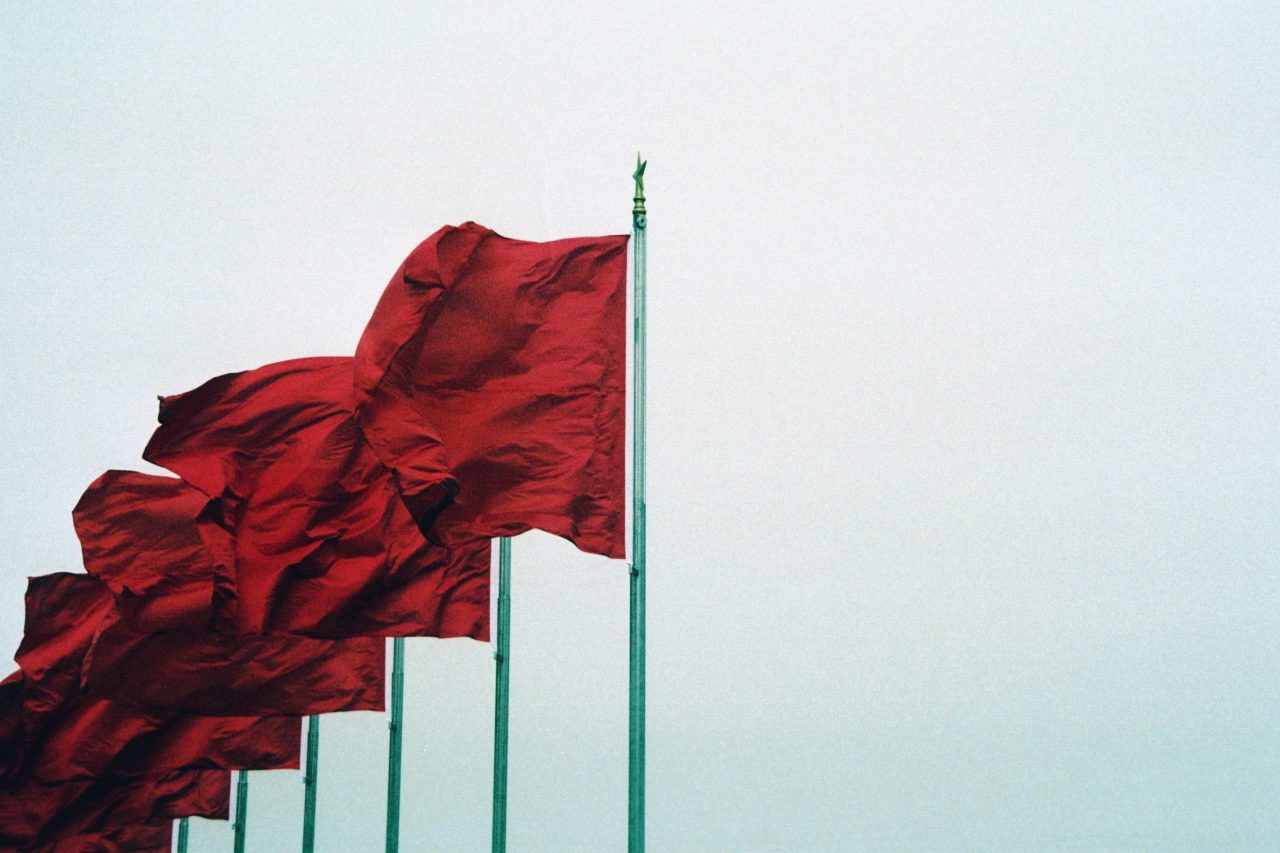
A colleague once made the whole team write a note to ourselves, to be kept for 365 days and then handed back. The assignment was to describe what had happened in a year. Mine skipped straight to the victory. You did it, well done, everything is going great. Not a word about how we got there.
I think most of us wrote that note. We wanted to see the win, not the struggle before it. Nobody writes “it got messy in March and I nearly quit in June.”
I found mine in my bag a while back. It was a lovely note, and it was missing the whole stretch in the middle, which is where the red flags live. That is how we treat them in real life too. We keep our eyes on the finish line and file anything in the way as noise.
What people actually do
Spotting a red flag is rarely the hard part. What we do next is. Mostly it is one of three things. We ignore it. We explain it away, which is more creative and therefore more popular. Or we wait for more evidence, which sounds sensible and often means waiting until the evidence is expensive.
The sociologist Diane Vaughan studied this after the Challenger disaster and called it the normalisation of deviance. A warning sign that did not end badly the first time gets filed as normal. The second time needs even less explaining. By the third, nobody remembers it was ever a warning. The unsettling part is that the person drifting rarely notices. And the one who names it out loud is often the one who gets called negative. It is not only a NASA problem. It works the same way on a project, a partnership or a person.
Information, not a verdict
Not every red flag is real. Some are just someone being different from you. Some are missing user manuals. So the first move is not to act. It is to write it down, with the date, on the day you see it. Not because you will forget the flag. Because you will forget how it felt and how quickly you explained it away.
The second move is to look for another one of the same kind. One is a data point. Two of the same kind is a pattern, and patterns are harder to explain away than incidents.
What I actually do
My own pattern has two parts. First I listen. I want to understand why things are the way they are before I touch them, even when everyone else is waiting for something to happen. Then, if something still looks wrong, I raise it once or twice and decide whether the fight is worth it.
From the outside the listening looks like patience. It is not. Believe me, waiting is not my favourite sport. The listening is something I do on purpose.
A Yogi tea bag, of all places, says, “Patience is not waiting; it’s knowing that the wait is worthwhile.” For someone like me, that is the only kind of patience on offer. I can wait as long as I know what for. That is also where it goes wrong. If I cannot say what I am waiting for, and what would tell me it was not worth it, I am not being patient. I am just letting the flag settle in.
“Is the fight worth it” is a question I would rather answer in advance than in the middle of the fight during the biggest hustle.
So the strategy I am building from it isn’t much. Give the listening a reason and a deadline. Decide in advance how many times I will raise a flag and what would make it worth a real fight. And write the flag down the day I see it, before the listening has a chance to explain it away.
If you go forward anyway
Sometimes you have to. The alternative is worse, or the upside is real, or the flag is something you can live with. That is a legitimate decision. It is just a different decision from ignoring it. Ignoring is pretending the flag is not there. Going forward is knowing exactly what you are carrying.
Some of my assignments have started exactly where the red flags are. Unclear decisions, work nobody owns, and a team that has stopped telling each other the truth. Those are not always reasons to stay away. They can also be the reason someone was asked to join. So the question is not whether there are flags. It is which flags are the problem I came to solve and which could be out of my reach. A decision nobody owns is a job. A sponsor who will not change their own behaviour may be a ceiling.
Sort them early, and write down the second pile.
The cleanest tool for the rest is Gary Klein’s pre-mortem. Before you start, imagine it has already gone wrong and write down why. The research behind it found that imagining the failure as a fact, instead of a possibility, produced about 30 per cent more reasons for it. That is what you want when a flag is already waving: more specific reasons, written down while you are still calm.
Then decide the exit before you need it. Take the second pile and put a date on it. If this specific thing has not changed by this specific date, I stop. Decided now, before you are invested, it is a plan. Decided later, in the middle of it, it is an argument with yourself, and you usually lose.
The price
Some nights, I have asked myself whether I have been awesomely resilient or just very stupid. Somehow the nighttime doesn’t make it any clearer… The outcome does not settle it either.
What separates the two is how you went in. Resilient is going forward knowing what you carry and what would make you stop. Stupid is going forward after explaining the flags away. Could be the same effort, the same stubbornness. Even the same tired face. From the inside, they sometimes even feel identical, which is why the question keeps coming back in the middle of the night with no new evidence.
Going forward with open eyes also means the flag may still come true. Then you cannot say nobody warned you. You did that yourself. That is the price, and it is a fair one.
If you get to write a note to yourself, what would it say? Would it be all about your glorious victory or something about the red flags along with the victory?