
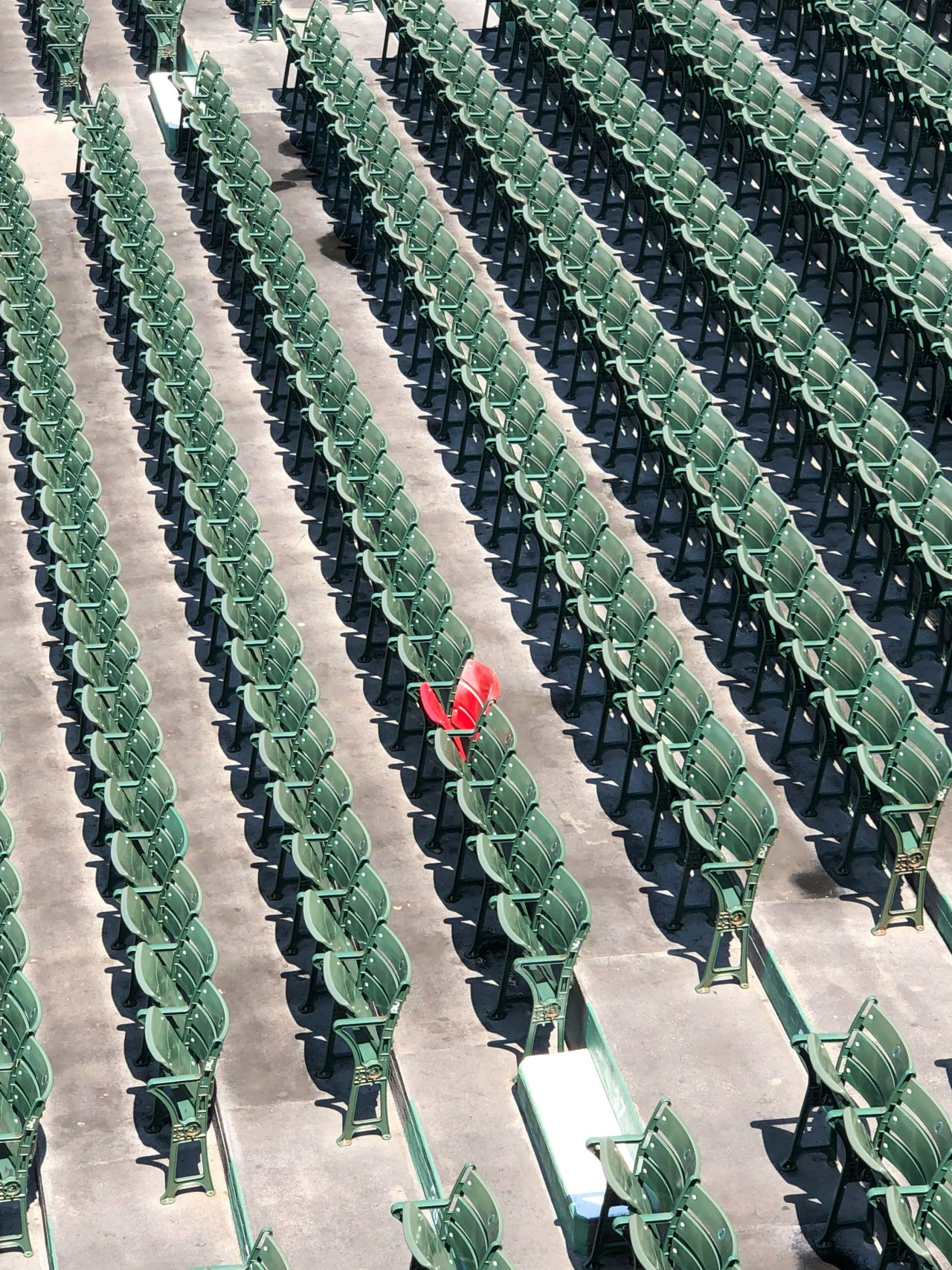
A few days ago, I was dropping the sixteen-year-old off at the subway station and asked about his first day at a new school and how it had been.
“It’s OK, but most of the people there look the same.” There we were, in the car, smirking at an outspoken thought: why show your personality when you can buy the same shirt as a hundred other kids and look just like one of them?
Security is a need, not a weakness
It reminded me of something I told him about six months earlier. I was driving him to a friend’s place when he made a comment that seemed almost incidental. My friends never want to go anywhere apart from the same places.
I told him that most of his friends, probably around seventy per cent, will always gravitate toward the closest and most familiar option. The same places, the same routines, the path that requires the least travel, the least change, the least unfamiliar territory. And they do this not because of anything about him. They do it because their need for security is simply larger than their need to explore.
That is not a flaw. It is a different setting on the same dial everyone has. Some people are built with a strong pull toward the familiar. It is not weakness, nor is it conformity in the moral sense the word usually carries. It is just what feels safe to their particular nervous system, and there is nothing wrong with wanting to feel safe.
And then I reminded him about himself
He does not have that kind of need for security, at least not in the same proportion. I brought up something he had already told me, back in ninth grade. He stated that he wanted to spend an exchange year in the United States during high school. And he is going next year. Nobody pushed him there. He decided it himself, years in advance, and has been walking calmly toward it ever since.
That is not bravery in the dramatic sense either. It is the same dial, just turned further toward exploration. His need to see something unfamiliar is larger than his need to stay close to what he already knows. Different setting, same instrument.
Neither one is the correct answer
This is the part that took me longer to learn than I would like to admit. For a long time I thought the exploring instinct was simply the better one. For me it presents something more interesting, more admirable, and more likely to lead somewhere worth going. It is not more correct. It is just less common, but not necessarily better.
The seventy per cent choosing the closest school are not failing at life. They are optimising for something real: closeness, predictability, the deep comfort of a world that does not require constant recalibration. That is not a smaller life. It is a different appetite, fully valid, meeting a genuine need.
I will admit one thing, and I am aware this might just be my own bias talking. The one advantage I keep noticing in people set more toward exploration is a wider perspective across more areas of life. Not necessarily deeper. Just wider. And it is something I have sometimes seen missing in people set more toward security, who can end up seeing a smaller slice of the world very well instead of a larger one less precisely.
That could be true. It could also just be what someone set toward exploration would naturally notice and value.
What this means somewhere other than a school hallway
I think about this in every organisation I have ever worked in, because the same dial exists in every room of adults, not just in a hallway of sixteen-year-olds. Some people need the closest, most familiar version of a decision. Some people need the version that requires travel. Neither group is doing right or wrong to anyone. They are both just trying to meet a need that was always going to be there, whatever the environment.
The shirt does not disappear either. It just gets more expensive and sometimes better tailored. That corporate uniform, the same navy blazer. The same three approved opinions in a leadership meeting. The same careful, slightly rehearsed way of speaking that signals I already know what this room expects and I have arrived pre-approved. It is the seventy per cent in the hallway, just older, maybe with better fabric and a bigger budget for looking exactly like everyone else in the room.
The mistake is building systems, or families, or teams, that only reward one setting on the dial and quietly punish the other. A team full of only explorers burns out from constant unfamiliarity. A team of only the security-minded stagnates from never being asked to travel anywhere unfamiliar at all. The interesting rooms have both, and know the difference is not a hierarchy.
What I actually wanted him to know
As anyone with a teenager in the house knows, getting them talking at all is a mission of its own. So the fact that we had this conversation, properly, without one-word answers, already made me proud of him before we got anywhere near the matching shirts.
But, returning to the shirts. It is not that the shirt is wrong. Not that his classmates are somehow smaller for choosing what is close. Just that it is about a need that has nothing to do with him or the shirt.
He has already found part of his own setting. The school he now chose over the closer one. The exchange year decided years in advance and calmly walked toward. One small step at a time, without needing anyone to push him there. That is not proof he is better than the seventy per cent. It is just proof of what he has found the direction of his dial.
And my oh my, did my dial take a lot longer to figure out than his.